We all know the answer to the question, “what is the Time? It is such and such by the clock. But when asked what is time? We truly do not have an answer to this question. Mankind has been obsessed with time and watches from time immemorial. Hourglass, water clock Sundials, moon phase clock, and what not! Its an amazing array of instruments we developed to the atomic clock in an endeavor to measure time precisely and perfectly to the millionth of a second.
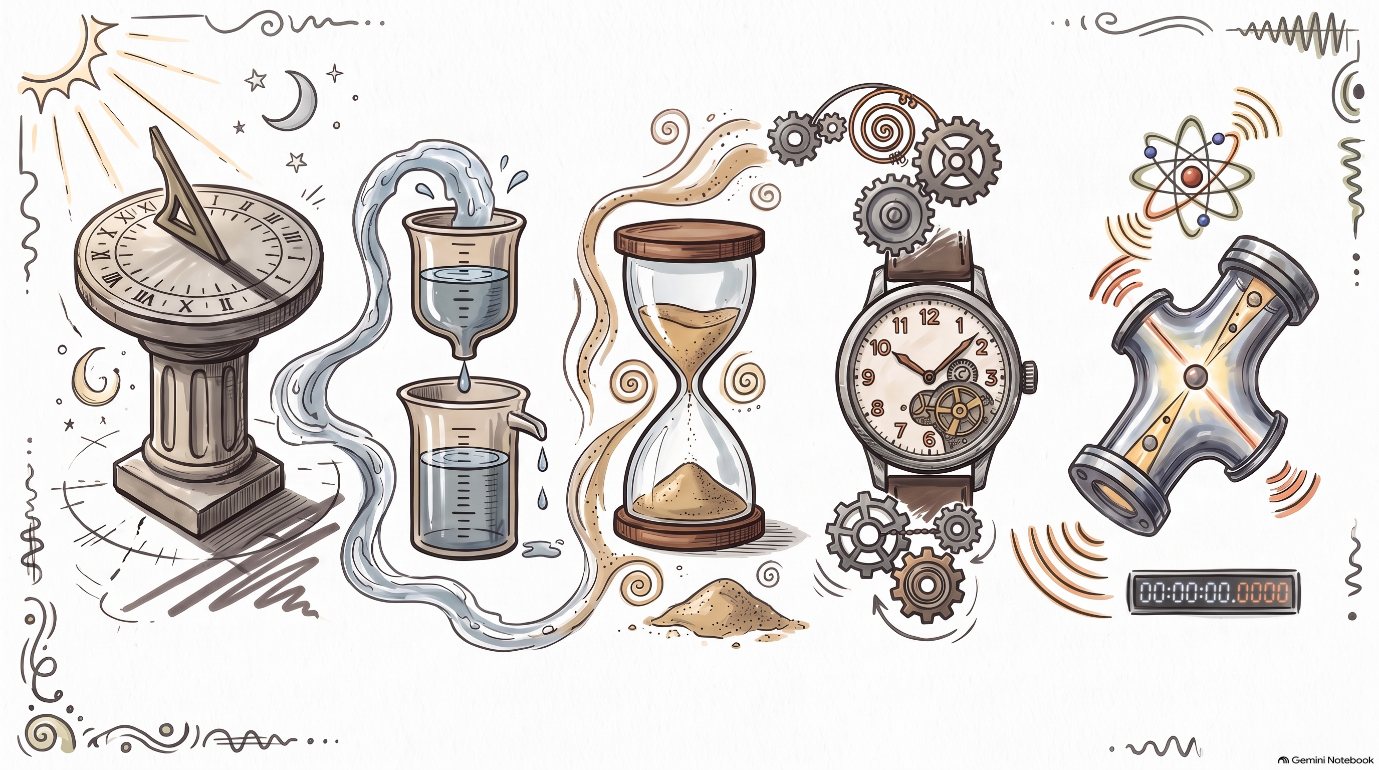
Yet, till we do not have an answer to the question, what is time, we cannot understand it nor can we devise methods to use it to our advantage.
Imagine, in the ancient era 1000s of years ago, how would a man agree to meet another man the next day. Imagine it to be the time when even the concept of a day was not formed.
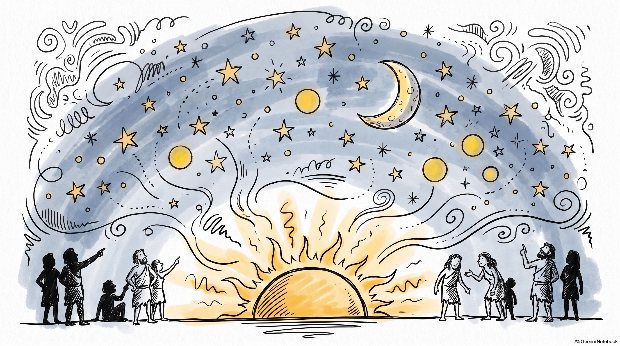
They would agree to meet the next time the sun was overhead or something like that. This was possible because they observed that the sun goes around the earth regularly and keeps coming up overhead again and again before going below the earth and coming up overhead again. They were certain the sun would be up again.
The ancient man had a great curiosity and observed the sky every night and wondered in awe at the marvel of the starlit sky. And soon he noticed several moving objects, what we today know as the planets. The moon of course used to light up the nights and it was the second great light after the Sun.
As the ancients started noticing things in the sky and the sun, they soon understood that when it was light, they could see everything and could gather food, hunt animals, and generally it was to their advantage. And during the night, the wild animals could see better with their nocturnal vision, and they were attacked by the beasts and they were generally unsafe.
Thus man made his own rules. Light is good for him and generally beneficial and therefore light was good and darkness was evil. White became good and black became evil. The angels wear white and the devil wears black. Many of the concepts we even use today and are generally accepted are centuries-old beliefs and traditions.
To come back to our point under discussion, man used the Sun initially and the regular feature when the sun was overhead and the brightest became the midpoint of the day. And the period it came back to be overhead again, was one day. They also observed that the period of two noon is similar to the period of two occurrences of the sun rising on the horizon. And soon noticed the similarity between the period from the rising sun to the overhead sun to the setting sun and they started formulating the concept of time.
Simply put, the duration between two similar events is called time. Note they are not the same even as we normally use colloquially, they are two similar events, but not the same. Every event occurs only once in existence. The same is never repeated. A series of existences is what we call the passage of time.
Thus for our understanding, Time is the duration between two similar events. We can now also develop this thought further and say, Time is the duration between two recurring events with different periodicities and developing further, Time is the duration between many recurring events with different periodicities.
Now the ancients initially started with calling the sunrise the beginning of the day. And thus, the duration between the sunrise to sunset as the day and the sunset to sunrise was the night. Then they went further and divided the period between the sunrise to sunset into two halves with the sun overhead dividing the entire day into two halves. Thus, we had the morning or sunrise, midday or noon, and the sunset or the evening. These parts were again divided into two parts and these two were again divided into three parts. Thus, morning to noon had 6 parts and noon to the evening had 6 parts. Now the Sun was called Horus by the Egyptians and the parts from morning to evening started being called the 1st horus, 2nd horus, 3rd horus and so on. Soon the horus became hours. To this day we call 1/6th of the period from sunrise to noon, the hour.
Now let us move to the Moon. The ancients also observed the moon. They noticed that the moon grows and becomes bigger and then shrinks and disappears and then starts growing again. It fascinated them. They saw that the duration between the full moons were approximately 20 to 30 days. The full moon was called the mooneth and from mooneth to mooneth comes month to month.
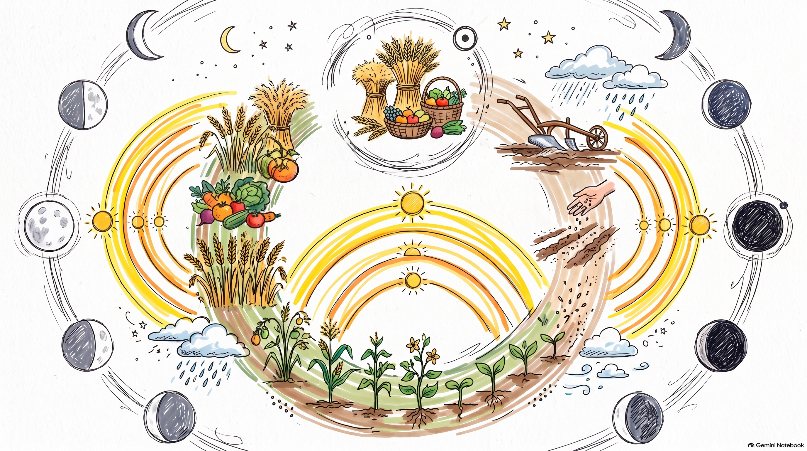
The period from Full moon to the disappearing moon or the new moon was about 14-15 days and it became the period of a fortnight. Now, this needed to be divided again, and the observation that the moon is semi-circular in shape, the half-moon, right between the new moon and the full moon. So the period from the new moon to half-moon, the half-moon to a full moon, from full moon to half moon and half-moon to new moon divided the month into 4 parts and thus the week of 7 days was marked.
Moving further, the ancients used to grow barley and corn. The ears of barley and corn are harvested once a year as we know now. But in those days, it was from harvesting the ears of corn from now to the next harvesting time. It was observed to be 365 days and thus term ears came into existence. This soon became years.
The next observation was in the whole period from harvesting the ears of corn to the next harvest, there used to be 12 mooneths and thus the year got its 12 months.
To this day, we follow this system, because it not only follows the systems of nature, but it also is a reliable indicator of the seasons and the events across the universe.